כניסה | הרשמה
שלום
להרגע עם צבע

להרגע עם צבע

חומרים בהם נשתמש

טושים מסיסים במים

דף צבעי מים 250 גרם

טוש פיילוט שחור

יומנים כרוכים בעבודת יד

יומנים כרוכים בעבודת יד

כריכת יומנים היא אומנות בפני עצמה.
כריכת היומן היא למעשה יצירה של מיכל עבור היצירה.  קיימים סוגים שונים של כריכות אשר מאפשרות יצירה בחומרים שונים.
החל מעבודה בתוך ספר קיים ועד כריכה של דפים נפרדים.
בגלריה זו תוכלו ללמוד על הסוגים השונים של כריכות.

The “Visual Journey Journaling”

The “Visual Journey Journaling”

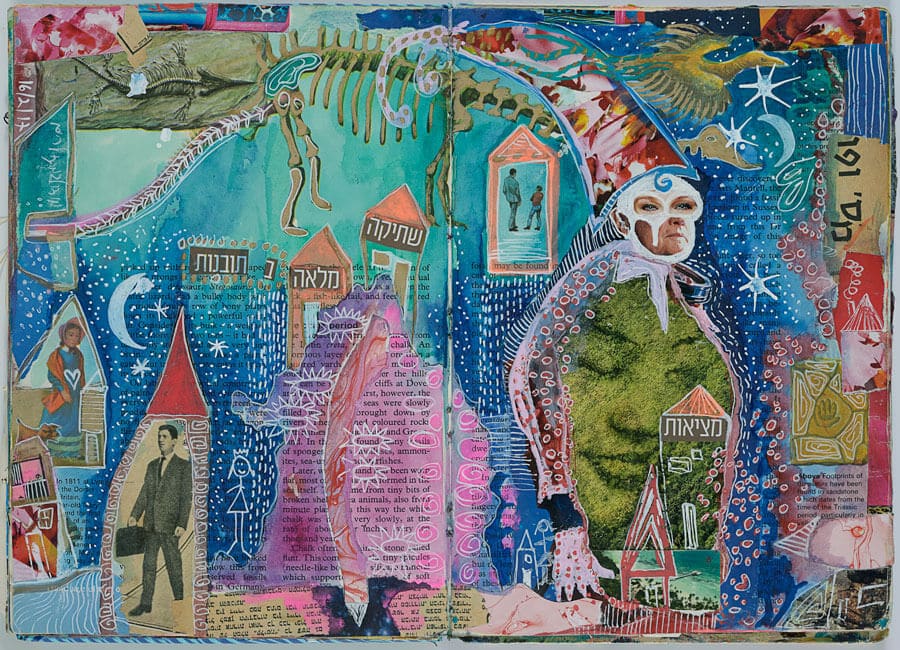
Visual Journal, creative journal, Art Journal – many names for that mysterious book-like object which unfolds unique, subjective, captivating and vivid “mental images” (Hadar, 2016). I often see the expression of being drawn and longing experienced by people who come across pages of such journals for the first time – they are captivated, as if by a spell… something about the images, the colors, the free expression calls upon them to reconnect with something deep inside.

Colors, lines, blots  and images are the oldest language spoken by our soul. Toddlers learn to draw before they learn how to read and write, and after a few years, at the age of latency, most of us lose the ability to use this special innate language. We are driven by self-judgment and comparison to others, who we always find more talented. Most of us give up on the use of art as a language – the language of symbols and metaphors, representing the mind in the strongest and clearest manner (ibid, 2016).

Art journals or Visual Journals have been around for many years and were adopted mostly by artists as a way to document their creative process. In recent years, art therapists, especially in the United States, began using Visual Journals and imaginative work as part of their work with clients.

Carl Jung (1954) created a few Visual Journals, with the most renown being the “Red Book”. In this journal he described fantasies and imaginary journeys with drawings and paint. In his “Red Book” Jung developed his theory about archetypes and the collective subconscious. He used his imagination and drawings in order to fix internal images. It is for a well-established reason that his theory served as one of the building blocks of art therapy.

Cathy Malchiodi (2002), a prominent figure in art therapy in the United States, says that a Visual Journal as a therapeutic tool is unique due to the following reasons: a relationship with an empathic and reflective therapist, therapeutic work that combines narrative writing and its establishment through visual means. The synergistic combination of text and artistic expression also creates an engagement of the two parts of the brain and facilitates, as she claims, the reduction of stress and relief from trauma, and finally – the journal becomes a significant object which documents the process of therapy and serves in fact as a transition object (ibid, 2016).

In her canonical book “The Creative Journal”, Lucia Capacchione (1979) describes the difficult period she experienced when she began making her creative journal. This period helped her formulate her theory about the use of a journal as an important therapeutic tool in art therapy.

Following my mother’s death, just like Capacchione, I went through a difficult time. During this period, I worked as an art therapist and became familiar with the Visual Journal. It helped me through a significant process of processing my grief and loss, and I have been researching and studying its many aspects ever since. This fascinating process of personal work, with individuals and groups, helped me develop a comprehensive scheme of facilitating Art-Journaling for groups.(Link-Scop, 2016)

This scheme is called “The Visual Journey Journaling ” (VJJ) and is essentially a method of facilitation that allows working with individuals and groups by means of a Visual Journal.

The method I’ve developed is intended not only for qualified therapists but rather for anyone who is ready to go through a process of deep inner change and embrace the work with a Visual Journal. Still, it is important to understand that the Visual Journal work is closely related to psychotherapy, and since it is a tool that can be put to use in psychotherapy, utmost caution and training is required in order to work with groups and individuals in a transformational manner.

This article will discuss the development of this innovative artistic practice which is closely related to the field of therapy; how may one be trained in this exciting practice? Who is the Visual Journal facilitator (groups and individuals)? And what are the different ways to teach about the Visual Journal?

The development of the Visual Journal as a “therapy/self-expression” movement

Along with the development of the Visual Journal as a tool of art therapy, a worldwide movement began to form, drawing many people across the US, Europe and lately in Israel.

Art-Journaling or Visual Journaling  has become a new field of art, closely related with psychotherapy and constituting a form of “self-care” or a tool for personal self-expression. This movement has been developing around the world for the past twenty years and is led

by artists that also practice therapy in some manner and therapists who are into the arts.

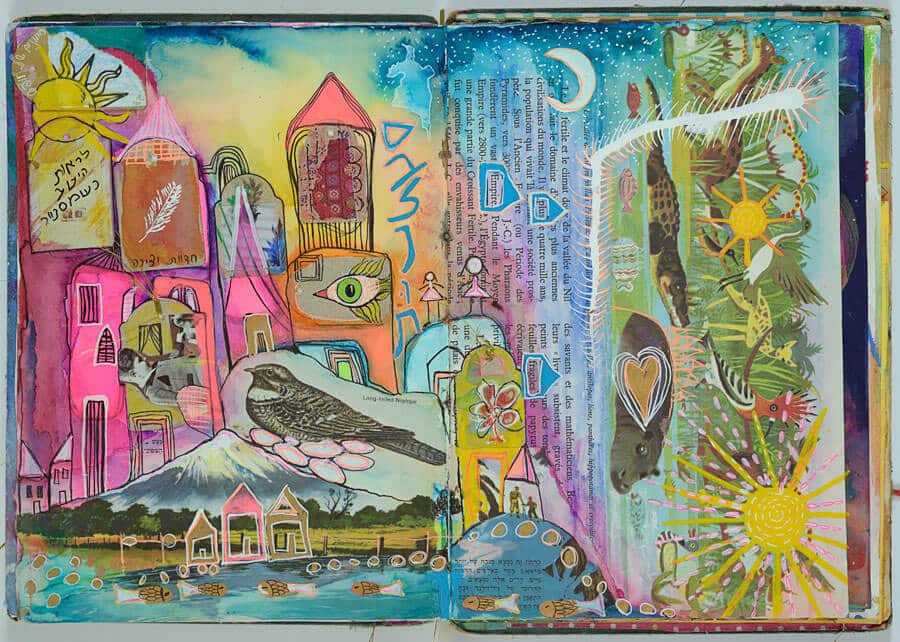
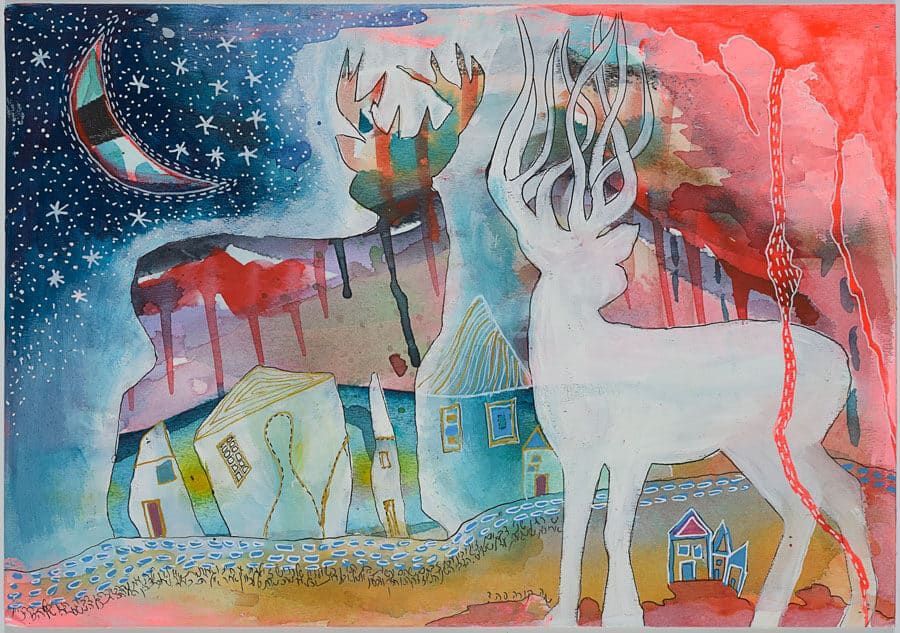
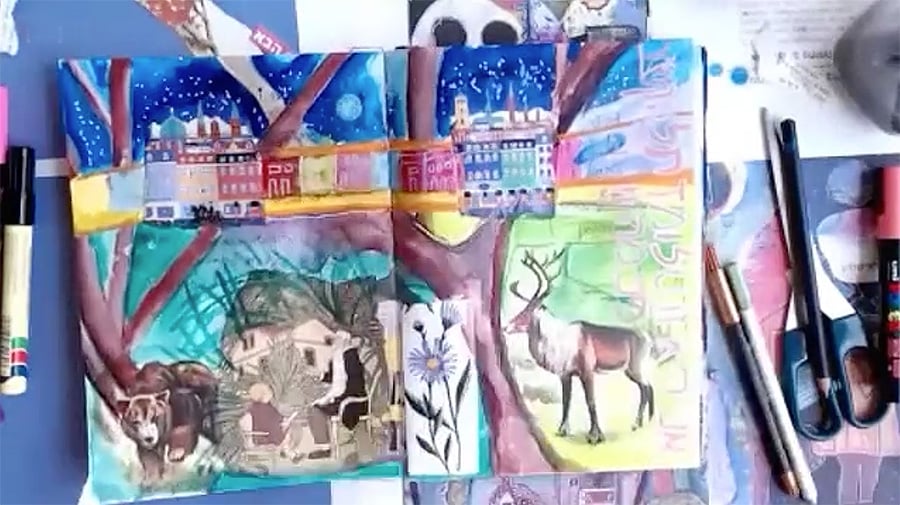
It is a journal and visual arts put together – a Visual Journal. The artwork incorporates many techniques and materials from the field of mix media. Any combination of materials and techniques is possible and acceptable. The works themselves look like “Soul Pages” displaying text, pictures, colors and materials in a variety of artistic techniques. Anything goes in the Visual Journal, any combination of techniques and materials you can think of: paints of various types, markers, pencils, sewing, printing, batik, watercolor, acrylic, drawing and in addition – intuitive writing, poetry and quotes from various sources. The journal integrates all types of textual and visual art and above all it serves as evidence of an internal process taking place within the author’s mind and soul.

This is an artistic-psychological field which draws large crowds and is expressed in internet groups and mutual sharing of works. This field allows many people to engage in highly personal work, without judgment or morals ​​and without the need to sell or declare oneself as an artist.

A Visual Journal enables the freedom to connect to oneself in an authentic and meaningful way and engage in internal investigation, healing and even transformation and evolvement. The use of various techniques does not require complete mastery of them, but rather they are used to express one’s inner self.

Working with a journal enables a connection and passion that is expressed not only in the journal but also in real life. The creative work in a journal has a ripple effect; it affects the person creating it, other areas of his/her life and other people who see the work.

How may we learn how to work with a Visual Journal?

The method of working with a journal may be learned in different ways: group lessons, private lessons, online courses and personal trial and error. But above all it is important to understand that any teacher / facilitator who teaches Art Journaling should be first and foremost an established artist in this type of media. A teacher of Art Journaling is a person who works regularly with a journal, investigates his own internal processes and develops significant methods to transfer these processes to people who come to learn from him/her.

Contrary to any other form of ​​art, learning Art Journaling means learning about internal processes and not only techniques and materials.

Around the world and across the Internet there are many groups and communities of Art Journaling. This practice allows many people to heal and recover.  This practice also allows any person who took a few classes in Art Journaling to open a course or a study group and teach others how to work with a journal. I’d like to stress my opinion against this phenomenon and say that it is highly important to develop individual and collective responsibility in this innovative field.

Instruction or facilitation of Art Journaling for groups or individuals, is not the teaching of a standard practice of art. It is a practice that involves the soul and walks the fine line between art and therapy. Therefore, there is a need to hold special training for facilitators in the field of Visual Journal work.

What is the role of a Visual Journal art group facilitator?

The proper method of learning how to work with a journal is not just through teaching techniques, but rather through personal work processes taught by the facilitator. The facilitator himself must  teach a combination of techniques and internal processes which he tested on himself, investigated, examined and developed.

It is a real alchemy of the creation of an internal-mental process integrated with imagery, techniques and the use of specific material techniques. The outcome is a “Soul Page” that enables the expression and processing of internal processes.

Since this practice is so closely related to psychotherapy, people who choose to teach “Visual Journaling” or “Art Journaling” must develop a unique personality; a combination of an artist and facilitator. This combination will provide them with the technical knowledge and theoretical knowledge so that they may instruct groups engaged in psychological matters, and that they’ll be able to lead people into feeling safe when introducing such matters. The facilitator-artist should know how to construct significant processes that will enable a true expression of the mental content brought about through artistic work.

The Visual Journal facilitator should first and foremost be a Visual Journal artist in his own right. A person who is familiar with many techniques and owns them through personal internal work. A person who works daily with his journal and gains much personal benefit from it.

This facilitator should be a person with strong internal ethics and integrity. A creative artist who has the desire and genuine curiosity to learn more about herself/himself and go through change and growth, even if it involves pain and exposure of vulnerable comfort zones.

This type of person works intuitively in her/his journal and then tries to understand the outcome, and the reasons for which the techniques and processes she/he selected caused an internal shift and change. They are a type of psychological scientist. They examine themselves all the time and are inspired by nature, by theories, by practices with which they

feel a connection, and by poetry. They make connections that are special and seem impossible.

Process and technique in the Visual Journal – a personal statement

Techniques are like vehicles carrying us from one place to another. The process is the willingness to dive in and discover wonderful things that exist only within us.

Each class I teach about the Visual Journal shifts between technique and internal process. My goal is to get my students to go through a meaningful process of growth rather than just the production of pretty visual pages. My aim is to have my students connect with themselves and realize that there is a whole world within them that yearns to break out and be expressed.

It is important to understand that each Visual Journal class is a work of alchemy involving an internal process, various techniques, various materials or physical processes such as ripping, burning, embroidery and the like which come together to form a physical-mental process that comprises of phases, each phase leading to the next, with all of them linked by a single intent.

In my courses for Visual Journal facilitators, I teach the unique process of using personal internal content and putting them together into processes through the Visual Journal. The uniqueness of this process is that each person learns to rely on their own inner world, their inner magical garden and their inventive and imagination capabilities. They learn to use these capabilities to form meaningful art / processes.

These processes are accompanied by journal pages created following the implementation of the process. Only when the process is generated by internal work in the journal, and by feedback sustains that same work, then that person may transfer the acquired knowledge on to his students.


I believe that any student in any Art Journaling course should not use the same complex processes experienced when they studied with a particular teacher, they must dive into their own wonderful garden or pool of ideas and create something new. Understand this idea is the real blessing in Art Journaling.

What is a work session using the Visual Journal?

In each Visual Journal class the facilitator needs to choose his place along these two axes:

Techniques on one side, internal process on the other side.

Structuring versus intuitive work.

When examining the work of a group over time we may observe a development from technique to internal process. As the group continues to work together and forms a vessel for work and sharing, they may advance closer to inner work and also use other techniques such as guided imagery, intuitive writing and so on. In the early stages of group work, the facilitator focuses mainly on teaching new techniques.

The movement on the second axis of structuring versus intuitive work also shifts as the group evolves. In the beginning of the work, sessions should be structured, step by step towards the creation of a complete work. As the group evolves the facilitator may allow them greater creative freedom and guide them towards internal work.

Types of Visual Journal sessions

1.     Techniques only – for example Gelli Plate prints, sewing and binding. A process such as this, which is technical in its essence, also contains aspects of evolvement, healing and awareness. Such classes are suitable for the first sessions of the group.

2.   Structured session – the facilitator develops a process, which is a combination of techniques and internal process, and leads the group to complete their work, step by step. Products often look similar because of the use of similar materials and techniques, but the content is different and thus the results are inevitably different.The advantage of this type of session is learning and acquiring skills of techniques. These sessions are important during the first months of the Visual Journal course. These sessions aim to provide students with a bank of various techniques

3.     Structured session with free technique.

 3.1 Structured artistic guidance: structuring is reflected in the instructions directing towards an internal process but expressed in artistic action – the choice of techniques and materials is free. For example, the facilitator may request “draw over a childhood picture of yours with acrilic”; each member of the group will be

able to draw on the picture in a different way and with different colors.Such type of session is suitable for a group that has been working for at least ten sessions and are able to work freely. 

3.2  Structuring using additional therapeutic tools: for example – focusing, guided imagery, or “ voice dialogue” and so on; and the creative work as a consequence should be mostly intuitive. Group members can choose to work with the variety of materials in the studio. This may require some guidance but there is more creative freedom. This freedom may provoke anxiety among people who still feel unconfident with techniques and do not work regularly in their journal.

4.     Entirely intuitive session – the facilitator introduces a random subject or allows students to choose their own subject and start working in a completely intuitive manner. This is the most advanced stage where students can work by themselves and require only occasional guidance – and an “extra eye” to assist them.

These sessions are especially suitable for advanced groups who went through the earlier steps and are able to work individually.

In each group session it is important to maintain a procedural structure with a segment dedicated for sharing at the beginning and especially at the end. Sharing helps processing the content and ensuring that the process was not too overwhelming emotionally.

A Visual Journal facilitator, in addition to her/his artistic ability and creativity expressed in the planning of the artistic process of the sessions – should develop mental and behavioral capabilities to enable her/him to lead the group in processes of processing and comprehension of what they created. He/she should lead the team through a clear path and phases appropriate for a group’s evolvement. I will delve into these capabilities of the facilitator in my next article dealing with the artist / facilitator and group work.

In conclusion

This article aims to briefly describe a new field of art closely related to therapy. Many people practice it individually and study with different teachers who have not obtained certification or who do not have the ability to touch the minds and souls of their students.

It is important to create milestones or ethical rules for ordinary people who wish to serve as group facilitators in this field of art. This article deals mainly with the ability of the facilitator to create sessions that comprise of processes that are a combination of internal work and creative work. This ability is associated with the facilitator’s personal development as a creative artist and his ability to create processes resulting from his own inner world.

A Visual Journal facilitator is a guide who walked a certain path and knows how to lead others safely through it. He/she has already mastered this path and created his/her own solutions which he/she then teaches others.

When we are able to regularly work with a journal and create our own solutions and processes – only then may we teach others. Therefore being a Visual Journal facilitator is not only a job for the sake of ego and earning money; it is a mission to teach others to trust themselves and realize that the real treasure is within.

In addition, a Visual Journal facilitator should develop processing and insight capabilities regarding subjects that may arise in the group due to the journal work – I will deal with this subject in my next article.

Being a Visual Journal facilitator is a responsibility but also a blessing. It means being constantly engaged in renewable ongoing work, a tireless search for authenticity and the formulation of a process that really works. This ability to lead others through an internal process based on materials and techniques – is a capability which evolves over time and with willingness, patience and determination to create new things; it is an ability which causes the facilitator himself/herself to evolve as an artist and allows him/her to connect with her/his inner passion.

Bibliography:

Rakefet Hadar (2016) “The Visual Journey Therapy” – the Visual Diary as a therapeutic tool. “Between Words” Kibbutzim College.

Capacchione, L., 2015. The Creative Journal, Ohio: Ohio University Press.

Malchiodi, C. A., 2002. The Soul’s Palette, Boston & London: Shambhala.

Jung, C. G., 2009. The Red Book, New York & London: W. W. Northon & Company.

מה באמת מרפא?

מה באמת מרפא?

מה באמת מרפא?
האם יכול להיות שהיומן הויזואלי יהפוך להיות לאחד הכלים המרפאים ביותר שהכרנו?

מה באמת מרפא?
זאת שאלה שאני שואלת את עצמי מאז ומתמיד.

כשהתחלתי לעסוק ביומן הוויזואלי הייתי באחת התקופות הקשות בחיי, אמי גססה מסרטן וידעתי שימיה כאן ספורים. הייתי יושבת לידה או במסדרון בבית החולים ומוצאת מעט מפלט בין דפי היומן, באמצעות הצבעים והמחברת הצלחתי להתחבר אל עצמי ולהביע חלקים כואבים בתוכי שלא היה להן דרך אחרת לבא לידי ביטוי.

במשך השנים שעברו מאז מותה, נוכחתי בכוח המרפא של היצירה בתוך פורמט אינטימי כמו היומן הוויזואלי. היומן אפשר לי ריפוי משמעותי שנגע ליחסים המורכבים שהיו לי עם אמי ולכאב ולאשמה שחשתי כאשר היא נפטרה בגיל צעיר יחסית.

מותה של אמי לא היה האבל הראשון שחוויתי. במהלך חיי חוויתי אבל  מספר פעמים וכל תקופה כזאת של אבל היותה משבר שהוביל בסופו של דבר לחיפוש דרך לריפוי.

אחד המשברים הקשים שעברתי היה בגיל 39 כאשר עברתי הפלה שלאחריה נכנסתי לתקופת דכאון שארכה כשנה . במשך תקופה זו התחלתי את המסע שלי לחיפוש  אחרי “מה מרפא?”.

רציתי להבין איך בנויה הנפש שלי? למה אני מרגישה כל כך רע? ומה באמת יצליח לרפא אותי?

היו כל כך הרבה שיטות ריפוי ותיאוריות שונות, ובדקתי רבות מהן. הייתי בטיפול פסיכולוגי רגיל, למדתי טיפול באמנות, עברתי מסעות שמאניים, קראתי ספרים בלי סוף, ברנדון בייס, ביירון קייטי ועוד ועוד..לאט לאט התחילה להתפתח תיאוריה של הנפש ויחד אתה סקרנות עצומה למסע הזה של חקר וגילוי.

המסע הזה שהתחיל לפני עשר שנים, לא הסתיים ואני מקווה שימשיך עוד ועוד. בזכותו הבנתי שמסע  של גילוי, מיפוי והבנה של הנפש הוא אחד מהגורמים המרפאים ביותר שקיימים. ההתחברות לאנרגיה של סקרנות וחיפוש היא אחד היסודות של שיטת הריפוי שהלכה והתפתחה באופן טבעי, שיטה שקראתי לה-“דפי הנפש”.

אז עכשיו כשהאלמנט של חיבור לנפש ברור,הגיע הזמן להסביר איך היומן הוויזואלי יכול להפוך לכלי שעוזר במסע הזה?. ולמה כולנו זקוקים לריפוי אפילו אם אנחנו לא מודעים לכך?

איך נרפא את הפצע שלנו?

אחד הדברים המשמעותיים שגיליתי מאז שהתחלתי ללמד את שיטת “יומן המסע הויזואלי” היא שכולנו כמהים לריפוי, הרצון לריפוי הוא אוניברסאלי.

 אנחנו נולדים עם פצע מסוים או מפתחים אותו במהלך הילדות שלנו, לעיתים אנחנו נולדים עם חסר עמוק וצרכים שמגיעים מגלגולים קודמים, במקרים רבים (אם לא בכולם)מתפתח כאב מהקשר שלנו עם הורינו שגם הם פצועים מהקשר עם הוריהם שלהם, לעיתים החיים פשוט קורים, יש מוות ומחלות או גנטיקה לא אידאלית. יש כל כך הרבה סיבות כדי שהפצע יווצר, והוא נוצר.

 אצל רובנו זה יותר מפצע, זה מרקם שלם של פציעות שצריך לרפא. אבל אנחנו נותנים לפצעים להגליד ונושאים אותם בתוכנו, עם שכבת העור העליונה הדקיקה ובפנים הפצע עדיין בוער.

וכך אנחנו חיים את חיינו, בצורה קצת מצומצמת בגלל שהפצע לא מאפשר לנוע בחופשיות, אנחנו חיים סביבו בזהירות ומאפשרים לו להמשיך לבעור תחת מסווה שהכל בסדר, הצלחנו להשיג את כל מטרות החיים או לפחות חלק מהן- יש לנו שותף לחיים, שניים שלושה ילדים, עבודה מסודרת, אבל הפצע שם, לפעמים קורות טלטלות עזות, עוד טראומה שפותחת את הפצע לגמרי והכל מדמם, הכל מאיים להתפרק.

ואנחנו מחפשים ריפוי, כל הזמן. 

הולכים לפסיכולוגים, למתקשרים, מדברים עם חברים ולפעמים לומדים טיפול או מוצאים בן זוג שישקף לנו את הפצע או לעיתים ידרוך עליו. וכל הדברים האלו עוזרים, הם מרפאים חלקים מהפצע שלנו, אבל לא את כולו. הם נוגעים בנו ועושים שינוי מסוים ואנחנו ממשיכים לחפש, עוד ועוד.

וזה הסיפור של החיים שלנו, לדעתי של רובנו, לחפש ריפוי לפצע שלנו, דרך כל דבר שאנחנו עושים.

מעבר לפצע, יש גם בשורות טובות- מהות הנשמה שלנו היא יצירה.

 האדם הוא יוצר מרגע היוולדו. זו מהות הנשמה שאיתה הגענו לעולם- יצירה.

מספיק להסתכל על תינוק ולראות איך הוא יוצר את עצמו בכל רגע ורגע.גם פעוט בן שנתיים או שלוש, חייב ליצור בדיוק כמו שהוא חייב לאכול. הוא סקרן והוא מגלה את העולם. הסקרנות והיצירתיות הן שתי התכונות המשמעותיות בתוכנו שמחברות אותנו לתשוקה פנימית, אותה תשוקה שמניעה את הפעוט לשעוט קדימה ולגלות את העולם.

 אולם בגיל מסויים ובהשפעות החברה ,האגו, אובדנים שחווינו ועוד סיבות רבות, אנחנו מחליפים את היצירה בהישגיות. אנחנו חותרים להשיג דברים במקום ליצור דברים. וההישגיות רק תורמת ומתחזקת את הפצע שלנו, כי היא מכאיבה והיא גורמת לנו להרגיש קטנים. ההישגיות גורמת לנו להשוות את עצמנו לאחרים, היא מכלה את כל היצירתיות הטבעית שלנו עד שאנחנו לא יודעים שהיא קיימת בכלל.

היצירתיות והסקרנות שלנו הן חלקים מולדים בתוכנו והן נמצאות בדיאלוג תמידי עם הפצע שלנו, לעיתים הן מרימות אותנו למעלה ועוזרות לנו להיחלץ ממצבים קשים ולעיתים הן מוסתרות עמוק תחתיו, כמהות לפרוץ החוצה כמו הר געש עוצמתי שהיה כבוי שנים רבות.


כשאנשים נחשפים לראשונה לעבודות של היומן הוויזואלי, הם נמשכים אליהן בלי לדעת למה?

הם מזהים בתוך עצמם איזו תשוקה, הם מזהים שבעבודות האלו יש יכולת לגעת בפצע ואולי לרפא אותו. הם יכולים לראות את עצמם לרגע בלי הפצע שלהם, חיים חיים מלאים יותר, שלמים יותר, מחוברים לתשוקה ולייעוד פנימי. זה נשמע אולי אידילי, אבל זה מה שהעיסוק ביומן הוויזואלי מאפשר- מקום לחלום בו את עצמך במצב הטוב ביותר שלך, מקום לגלות בו את הפוטנציאל שלא חלמת שתוכל להגשים, מקום להתחבר דרכו לכוחות ואנרגיות שהיו חבויות עמוק בפנים.

היומן הויזואלי מחבר אותך בהתחלה למנוע של תשוקה, כשיש לך את התשוקה אתה מקבל כוחות לגעת גם בשכבות עמוקות יותר, זה מה שהיומן יוצר- חיבור לכאב מתוך מקום של כוח, מתוך סקרנות לגעת בו כדי לשנות אותו. ולעיתים זה מציף, לעיתים זה כואב, לעיתים זה מרגיש שזה יותר מדי, אבל ברגע שצולחים את המקום הזה, אתה כבר נמצא במקום עמוק יותר, במקום של הפוטנציאל.

אז מה זה בעצם היומן הוויזואלי ואיך הוא מאפשר ריפוי?

היומן הויזואלי הוא כלי אומנותי שהוא שפה בפני עצמה. העבודה בו היא בפורמט של מחברת ליניארית לכאורה שאפשר לפתוח ולסגור, אפשר לקחת לכל מקום, אפשר להסתיר ואפשר לגלות. אתה יוצר את המחברת כסוג של מיכל שבו תוכל לשים את עצמך בצורה מלאה, בלי ליפות ולקשט.

היומן הוא-להרשות לעצמך להיות אמן בלי שתציג עבודות או אפילו תראה אותם לאף אחד.

בעיני האמנות היא מתנה שהמין האנושי קבל כדי שכל אחד יוכל להשתמש בה, לא כדי להפוך אותה למשהו אליטיסטי ויפה שצריך להתאמן וללמוד שנים כדי לעסוק בה. האמנות היא שפה שנועדה להיות פעילה וחיה מהרגע הראשון, מהסימן הראשון שתינוק עושה ומתגאה בו. האמנות והיצירתיות היא כוח שטבוע בתוכנו ולעיתים נמצאת עמוק, מתחת לשכבת הפצע הבוער, כל כך עמוק שקשה להגיע אליה.

אמנות נועדה לבטא את מה שקורה בתוכנו ואת החוויה הסוביקטיבית שלנו , היא מאפשרת לרגע פינה של שפיות ושקט. וזה צורך אמיתי שיש לכל אחד מאיתנו, וזה מזון שרובנו לא אוכלים כי הם פוחדים או מרגישים שאין להם כשרון.

היומן הוויזואלי למעשה מחזיר את האמנות לידינו, כל אחד הוא אומן מלידה וחייב ליצור כדי לחיות.

היצירתיות והתשוקה שמתגלות תוך כדי עבודה ביומן מחלחלות אל שאר תחומי החיים ומשפיעות עליהם.

העבודה בשיטת “דפי הנפש” מרפאת כי היא נוגעת בו זמנית גם בשכבת הכאב וגם בשכבת היצירתיות, השיטה משתמשת בכוח היצירתי שקיים בתוכנו כדי להתמודד באמצעותו מול הכאב שהפצע יוצר בתוכנו. וככל שעושים את זה יותר, האנרגיה של היצירתיות גוברת ומתחילה לרפא את הפצע.

הטכניקות שאיתן עובדים ביומן הן פשוטות, שילוב של כל חומר וכל מדיה אומנותית יעבוד, בתנאי שתוכל לסגור את המחברת ולעבור לדף הבא.

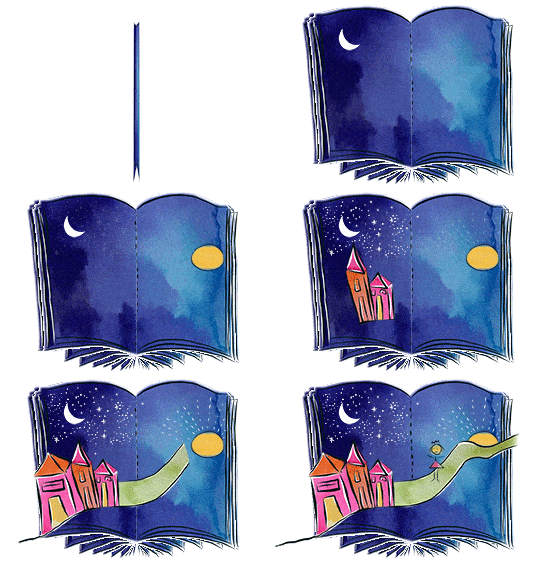
העבודה ביומן נעשית בשכבות, מתחילים ממשהו ששובר את הדף הלבן וממשיכים ממנו, כותבים, מציירים, מכסים וחושפים. הכל עובד והכל נשאר שם, בדיוק כמו שכבות הנפש.

לעיתים מגלים תובנות רק לאחר זמן רב, אנחנו מדפדפים ביומן שיצרנו ויכולים לראות את הדרך שעשינו. בלי לשים לב הפצע התחיל להתרפא, וזה בא לידי ביטוי בדרכים עדינות, בצבעים שאנחנו משתמשים בהם, בפחות שיפוטיות כלפי עצמנו. הצעדים קטנים, אבל ניתן לראות אותם, כי היומן תמיד איתנו, מלווה אותנו כמו חבר נאמן.

התהליכים שאיתם עובדים ביומן  כל כך מגוונים, תלויים במנחה או במורה שמלמד את השיטה, אבל הקו המנחה הוא שימוש במטפורות וסמלים כדי להגיע למקומות עמוקים בלי חשש.

הסמל והמטפורה מאפשרים לנו נגיעה רכה יותר בכאב, הם הופכים את הכאב לנסבל, הם מאפשרים לו להיות מושא התבוננות והפקת תובנות.


סיכום ביניים

האלמנט הראשון והחשוב ביותר של הריפוי הוא – הסכמה לצאת למסע של חקר, גילוי ומיפוי של הנפש שלנו, באמצעים מטאפוריים ויצירה בתוך מחברת שהופכת לחפץ עוצמה וכלי ביטוי ויזואלי ומוחשי לתהליך שעברנו

שפת הסמלים והמטפורות היא שפת הנפש

השימוש באמצעים מטאפוריים מאפשר לאדם הרחקה של הנושא וטיפול בו מזוית אחרת. כאשר אני חוקרת מטאפורות מורכבות באמצעות הדמיון, מתפתחת יכולת ריפוי מדהימה של הנפש.

היומן הוא כלי שיכול להתחבר לשיטות רבות של דמיון, אך השיטה שאתה אני עובדת בשילוב עם היומן מבוססת על טכניקת המסע השמאני, טכניקה שבה ניתן לחקור את הנפש שלנו באמצעים של שינוי מצב תודעה ודמיון פעיל.

כאשר אני מבטאת את הגילויים שלי באמצעים אומנותיים, מתחילה לפתח “שפה אישית של סמלים” מתחילה להיווצר מעין מיתולוגיה אישית וייחודית שלי , מעין עולם בתוך עולם שבו יש לי אפשרות לעשות טרנפורמציה אישית באמצעות היצירה. כאשר אני יוצרת הלכה למעשה את חלומותי בתוך היומן- הזרעים נזרעו והשינוי מתחיל להיוצר.

לכן האלמנט השני של הריפוי הוא- היכולת לתרגם ולתעד את הגילויים שלנו בצורה ויזואלית ומטאפורית, באמצעות טכניקות פשוטות,בתוך פורמט של יומן .

על ידי התיעוד הויזואלי בתוך יומן אישי, אנחנו מתחברים בחזרה למקור שלנו, למהות האנושית שלנו כיוצרים. האלמנט של היצירה כנתיב התפתחות של הנשמה הגבוהה לעומת ההישגיות של האגו, הוא המשמעותי כאן. היצירה לכשעצמה והתרגול שלה בתוך היומן – מאפשר אחזור של כוחות וחיבור לתשוקה אמיתית.


הריפוי קורה בצורה הדרגתית, לעיתים עם עליות וירידות וזה לא פשוט לקבל את זה.

בהתחלה זה מרגיש כמו התאהבות , יש בזה קסם והתרגשות- מגלים משהו חדש שפותח עולמות נרחבים. לומדים שפה חדשה של חומר וצורה ועדיין לא נוגעים בפצע, לפעמים בעדינות מרפרפים מעליו ואז עולות דמעות, עולה זכרון ונוצר שיתוף בין בנות הקבוצה שמקרב אותן.

ההתאהבות היא מטאפורה יפה כי זה מה שאני פוגשת אצל רוב התלמידות שלי בתחילת הדרך, יש אושר מהגילוי של היומן, יש תחושה שהוסר מסך שתמיד היה שם, שהן קבלו מתנה חדשה לחיים שמוסיפה עושר וצבע ותשוקה אמיתית.

ככל שמתקדמים עם עבודת היומן מגיעים לשכבת הפצע שם עומדים לעיתים בצומת של בחירה- האם אני רוצה לרפא או לשמר את המצב הקיים? 

יש אנשים רבים שזקוקים לאמנות עצמה ככלי מרפא, הם לא צריכים את התיווך של הסמל או המטפורה או כל תרגיל מתווך אחר, הם זקוקים לצבעים, לחומרים וליצירה של מה שבעיניהם הוא- יופי. הם זקוקים נואשות ליכולת לבטא את עצמם באמצעות האמנות. הצורך הזה כל כך עמוק שהם לא מרגישים צורך לעבור דרך תרגילי כתיבה או מודעות , הם פשוט רוצים לצלול, הם רוצים את הטכניקות האמנותיות כדי שיהיו להם כלים לביטוי, הם רוצים מידע על חומרים ובבית הם רואים סרטוני יו טיוב ומתמכרים לעבודה יומיומית ביומן. אנשים כאלו ממלאים מחברות בעבודה מאד אישית ופנימית והעבודה עצמה מתחילה להשפיע, לגעת בכאב ותוך כדי לרפא אותו.

 לאחר ההתאהבות הראשונית מגיע שלב של בחירה- לאן ממשיכים? האם למערכת יחסים של אהבה ,התמסרות וקבלה גם של החלקים הפחות נעימים? או למערכת יחסים לא מחויבת, של און אנד אוף, ריחוק וקרבה.

בשני המקרים יש תחושה שמי שממשיך לאחר ההכרות הראשונית עם היומן, מבין שיש כאן כלי של עוצמה ושל אהבה, השאלה עד כמה מתמסרים אליו?

אם בוחרים בדרך של ההתמסרות- הפצע והכאב יצופו בשלב מסוים, כי היומן יחשוף אותנו לשכבת הפצע בתוכנו במוקדם או במאוחר ושם טמון הכאב הגדול וגם המתנה הנפלאה ביותר.

 הנגיעה בפצע החי כואבת ואנחנו רוצים רק להפסיק לגעת, לתת לו להמשיך להתקיים בתוכנו באותו דו קיום שהורגלנו אליו כל חיינו, רק לא להעיר אותו שוב, הוא היה כבר רדום והתרגלנו לכל המגבלות שלו.

אבל אם נעז לגעת בו דרך היומן ונעיז לנסות לרפא אותו- יש סיכוי להיות כל מה שחלמנו להיות, כל מה שנועדנו להיות, הרבה יותר גדולים ממה שאנחנו מעיזים לקוות, הרבה יותר אוהבים ומלאים באהבה.


ומה עכשיו?

הדרך שלי עם היומן הובילה אותי בדיוק למקום הזה, המקום של הצורך בריפוי אמיתי. המפגשים שיצרתי עבור התלמידות שלי הפכו במהלך השנים יותר ויותר קרובים לשכבת הפצע, יותר נוגעים ולכן גם יותר כואבים עבור חלק מהנשים שאיתן אני עובדת. השנה ראיתי את זה בפועל כאשר בנות רצו לעזוב באמצע השיעור כי חוו כאב, או לא הגיעו למפגש כיוון שחששו שהכאב שלהן יציף אותן מול הקבוצה. 

וכמעט כל אחת מהן בחרה להמשיך ולעבור דרך הכאב ולמצוא את הדרך שלה לריפוי, להבין מה יעזור לה עכשיו? לאיזו נגיעה היא זקוקה? האם זה צבע או דימוי מסוים?, האם זו מטאפורה אחרת שתשים את הכאב בפרספקטיבה ואולי שיחה עם חברות הקבוצה וקבלה של נקודות מבט אוהבות. 

והיופי של לראות את התהליך הזה נרקם שלב אחרי שלב במחברת שהולכת איתן לכל מקום, מחברת שאפשר לדפדף בה ולראות את הריפוי שהושג בפועל. זה צעד שהצלחתי לעשות, זה עוד מכשול שהתגברתי עליו.

ועכשיו אני שוב בחיפוש, חיפוש אחר דרך למיטיבי לכת, שמוכנים לקפוץ למים ולגלות עוד רבדים של כאב ועוד שכבות של יצירתיות וכל זאת במטרה להנגיש את היומן הוויזואלי לאנשים רבים, לכל אחד, לכל מי שמוכן ורוצה להכיר אותו. 

אז הבשורות הטובות הן שאחרי שכבת הפצע מגיעים לשכבה עמוקה יותר של פוטנציאל, יצירתיות, יעוד או הנשמה, כל אחד קורא לשכבה הזאת אחרת, אבל היא שם, זו הבטחה, היא שם ומחכה לנו רק שנעז לעבור דרך הכאב הזה ולגלות אותה. 

וכשמגיעים אליה- השמיים הם הגבול!

דילוג לתוכן